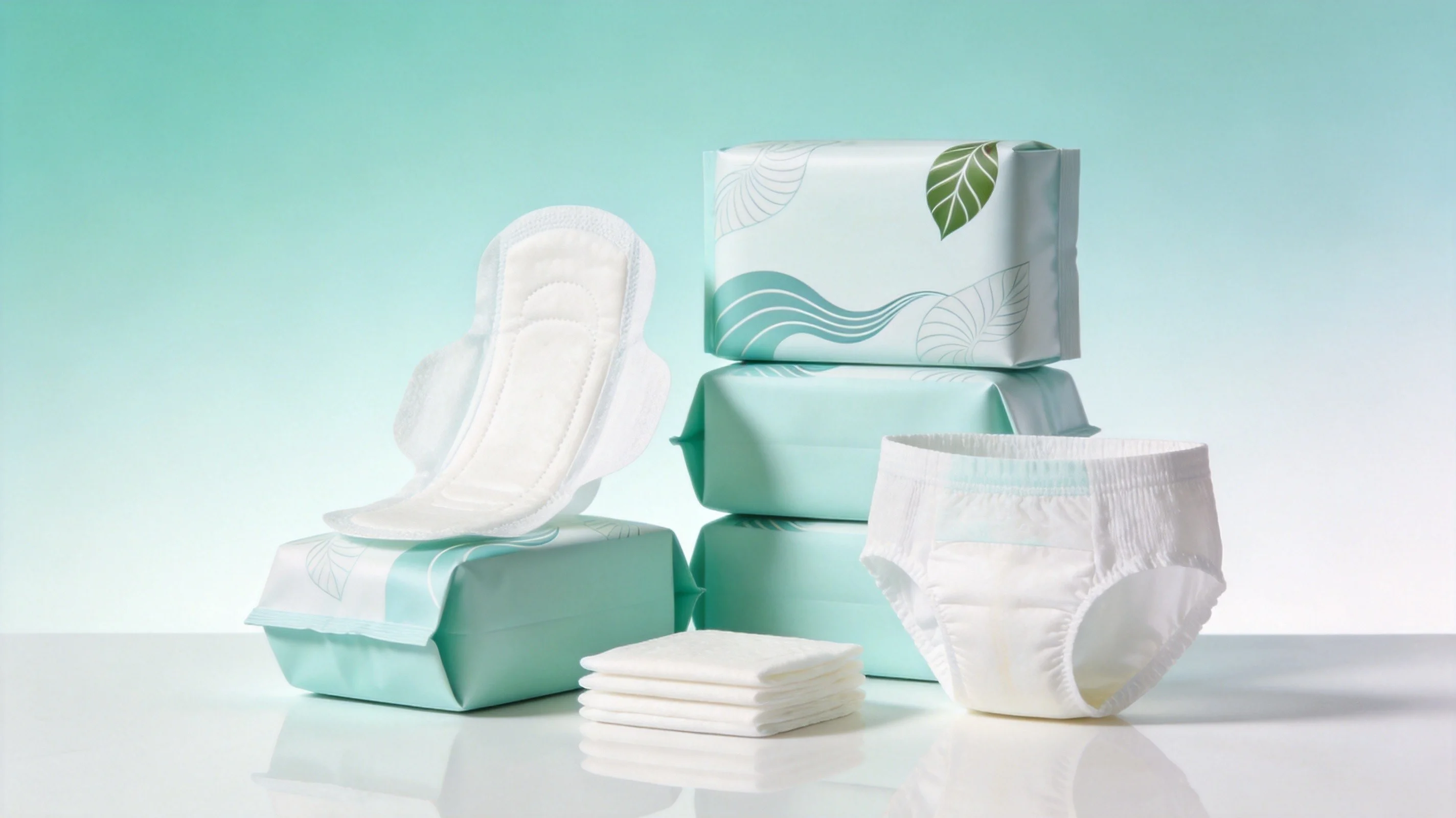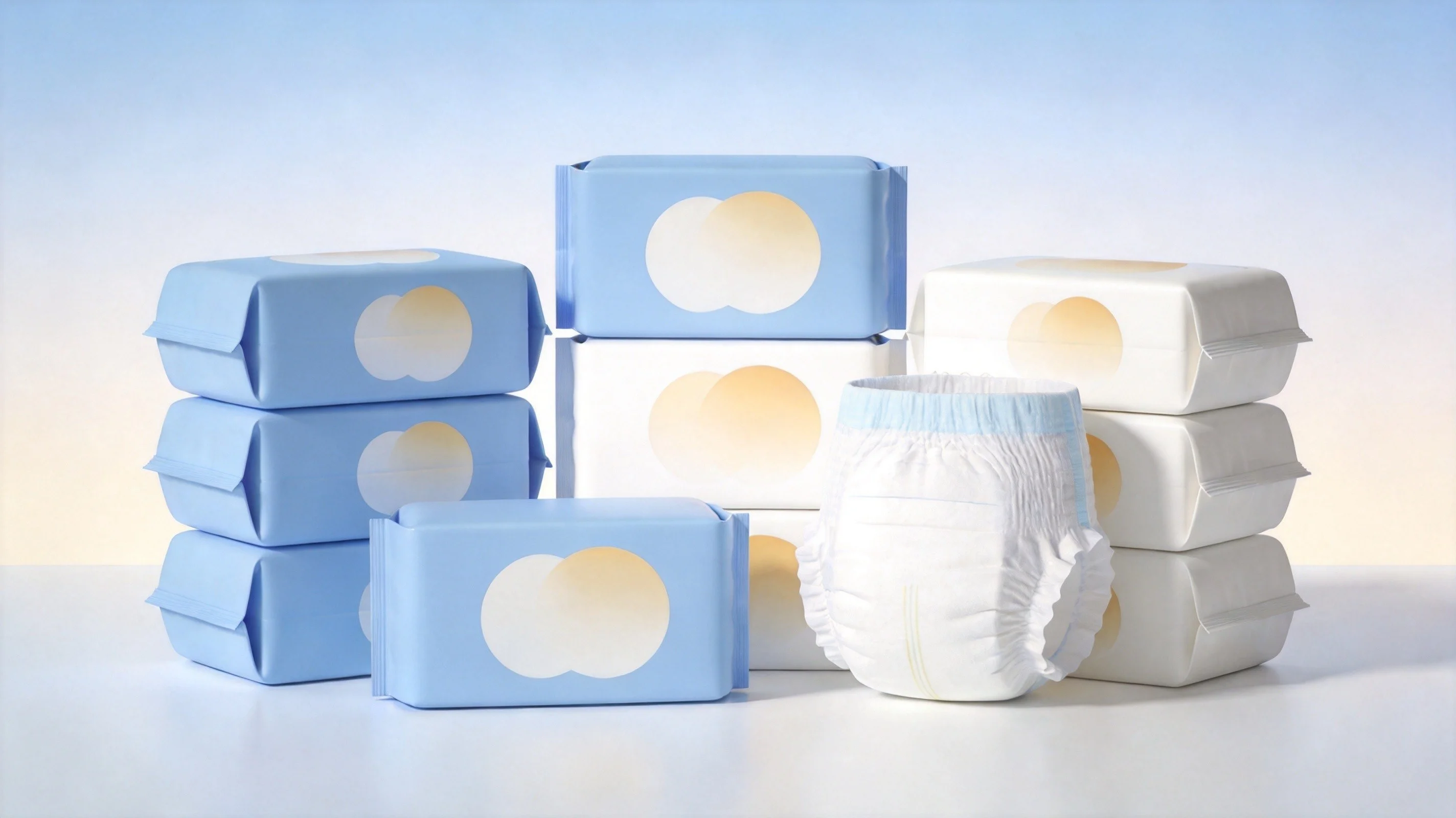

Application Areas
Premium Baby Diapers
Skin-contact layers and cores in premium tiers where softness is the selling point
Feminine Care
Top sheets and liners where a soft, smooth surface is valued
Wet Wipes
Substrates and absorbent components for bamboo-positioned wipe lines
Adult Incontinence
Comfort-oriented products for long-wear applications
Mask & Hygiene Products
Absorbent and comfort layers in disposable hygiene articles
Pet Hygiene
Premium pet pads positioned on natural materials
Product Specifications
| Technical Point | Typical Specification | Buyer Benefit |
|---|---|---|
| Brightness | 78–84 ISO | Natural off-white tone suited to bamboo positioning |
| Moisture | 7.0–9.0% | Stable defibration on standard equipment |
| Freeness (CSF) | 560–660 ml | Finer fiber requires slightly adjusted hammermill clearance |
| Water Absorption | 8.0–10.0 g/g | Good capacity with a softer hand feel |
| Bulk | 12–16 cm³/g | Lower than softwood; blending raises bulk |
| Fiber Length | 1.8–2.4 mm average | Finer, softer fiber with a denser formed mat |
| Blend Recommendation | 30–60% with softwood | Balances softness against bulk and strength |
| Sheet Form | Jumbo reel or bale | Custom widths on request |
Typical ranges only. Batch-specific TDS is supplied with each shipment.
Detailed Product Description
The softness and bulk trade-off
Shorter, finer fiber produces a smoother surface and a softer hand feel, but it also packs more densely. A pure bamboo core will feel softer and thinner than a pure softwood core of the same weight. Whether that is an advantage depends entirely on the product: for a slim liner it is; for a high-capacity overnight product it usually is not.
The usual solution is a blend. Bamboo at 30–60% with softwood gives a noticeably softer surface while keeping bulk and wet strength within specification.
Working with the antibacterial story responsibly
Bamboo fiber’s antibacterial reputation is well established in consumer perception. If you intend to make an antibacterial claim on packaging, check the regulatory requirements in your target market first — perception and claimable performance are not the same thing, and the claim must be supported by testing on the finished product.
Line adjustments
Finer fiber defibrates faster. Expect a slightly lower hammermill current and a denser mat. Forming vacuum and compression settings often need a small adjustment to avoid over-compacting the pad.